

The most important of the Baga art forms is the great mask, D’mba or Nimba.
It represents the mother of fertility, protector of pregnant women, and presides over all
agricultural ceremonies. The dancer, wearing a full raffia costume, carries the mask on his
shoulders, looking out through holes between the breasts. In use, such masks rise more
than eight feet above the ground; they often weigh more than eighty pounds. Most show a
standardized pattern of facial scarification.
” Nimba is the joy of living; it is the promise of abundant harvest”
The Baga Nimba, or D’mba, represents the abstraction of an ideal of the female role in
society. The Nimba is essentailly viewed as the vision of woman at her zenith of power,
beauty, and affective presence; rather than a goddess or spirit. The typical Nimba form
illustrates a woman that has been fertile, given birth to several children, and nurtured
them to adulthood.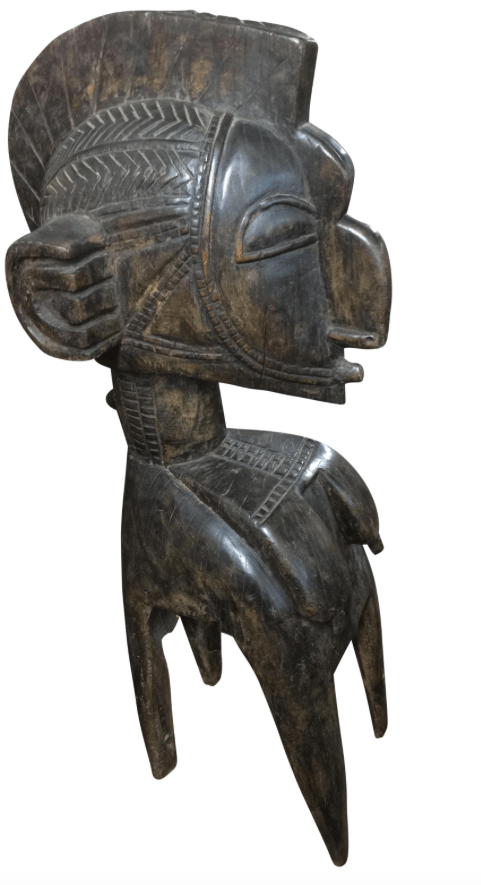

 Frenc country oak cabinet with key. Great in a kitchen, dining room, or anywhere you need extra storage .
 Antique quarter sawn oak stacking bookcase circa 1910. Great for collectibles or books.
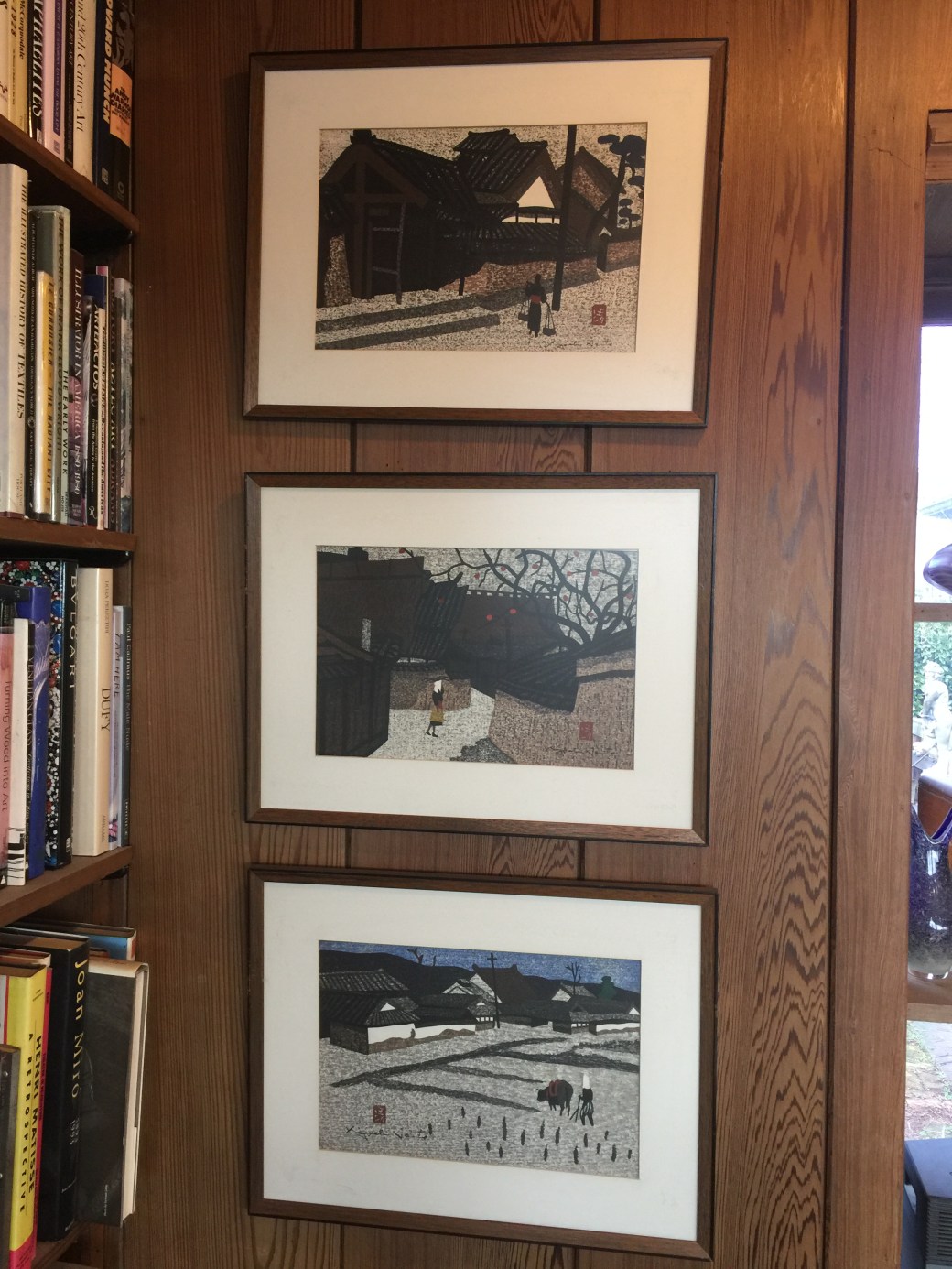
 The serene expression would bring peace into any room.
 This 16 the century replica has koi, red lacquer, and craved gilt legs. Usually the lacquer was commissioned and then put in a frame either as a table or hung on the wall.
 This is actually a Canterbury used for sheet music. It is said the Archbishop of Canterbury commissioned one for sheet music in the 18th century. Impractical today to sit by the piano , we now use these for beautiful magazine stands.
 Good Better Best